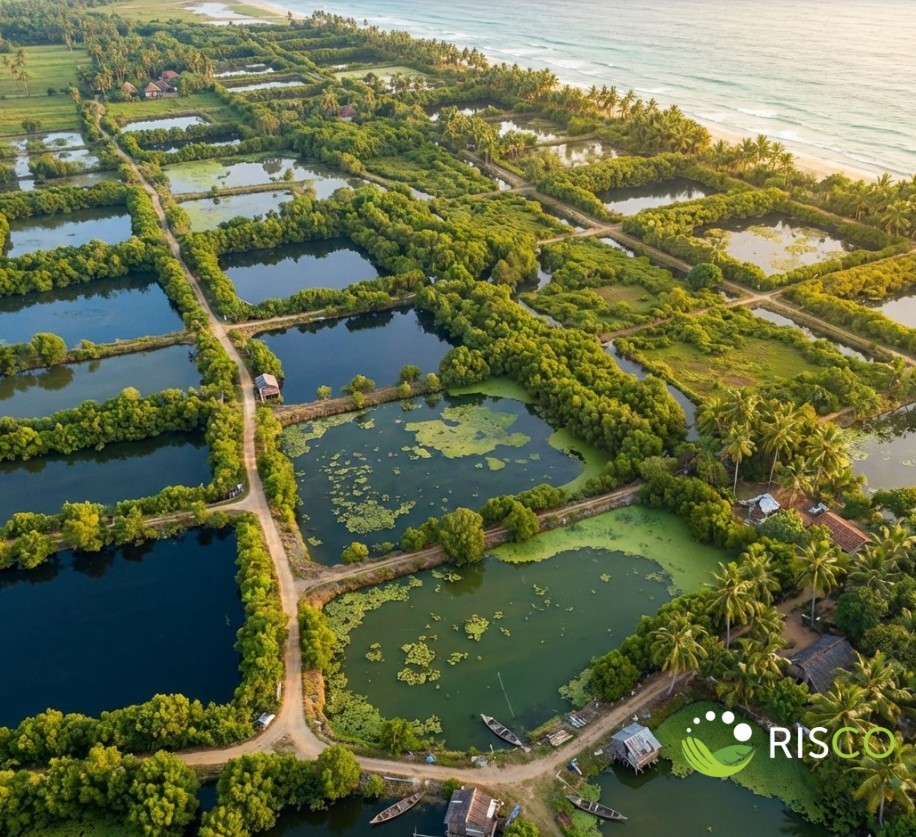
A financially sustainable model that ties aquaculture lending and parametric insurance to measurable mangrove conservation — deployed in the Philippines, expanding across Southeast Asia.
Most conservation and livelihood programmes run in parallel — RISCO's MARIS model combines them into a single, commercially viable lending product.
MARIS combines three financial instruments that individually are insufficient — but together create a resilient, replicable model for coastal communities.
Loans are disbursed per aquaculture cycle. Repayment is a fixed percentage of actual sales revenue — typically 15–25% of each harvest. If a cycle fails due to weather or disease, no repayment is due and no default is triggered. The loan stays active until the repayment ceiling is reached across successful harvests.
Weather-triggered parametric coverage pays out within days of a qualifying event — typhoons, flooding, temperature extremes. No claims adjuster needed. Payouts protect both farmer income and RISCO's loan portfolio, making the model bankable even in climate-exposed coastal zones.
Each borrower must maintain a mangrove buffer within or adjacent to their pond. RISCO's AI platform monitors canopy health via satellite imagery and on-the-ground data. Restoration progress is tracked alongside financial performance, creating a linked conservation and commercial record.
MARIS is already operational — not a proposal, not a pilot. Here is what we have delivered.
MARIS is designed to be replicated across Southeast Asia where 250,000+ hectares of abandoned fishponds represent both a livelihood and restoration opportunity.
Whether you're a DFI, impact investor, or conservation partner — there's a role for you in expanding MARIS across Southeast Asia and beyond.